
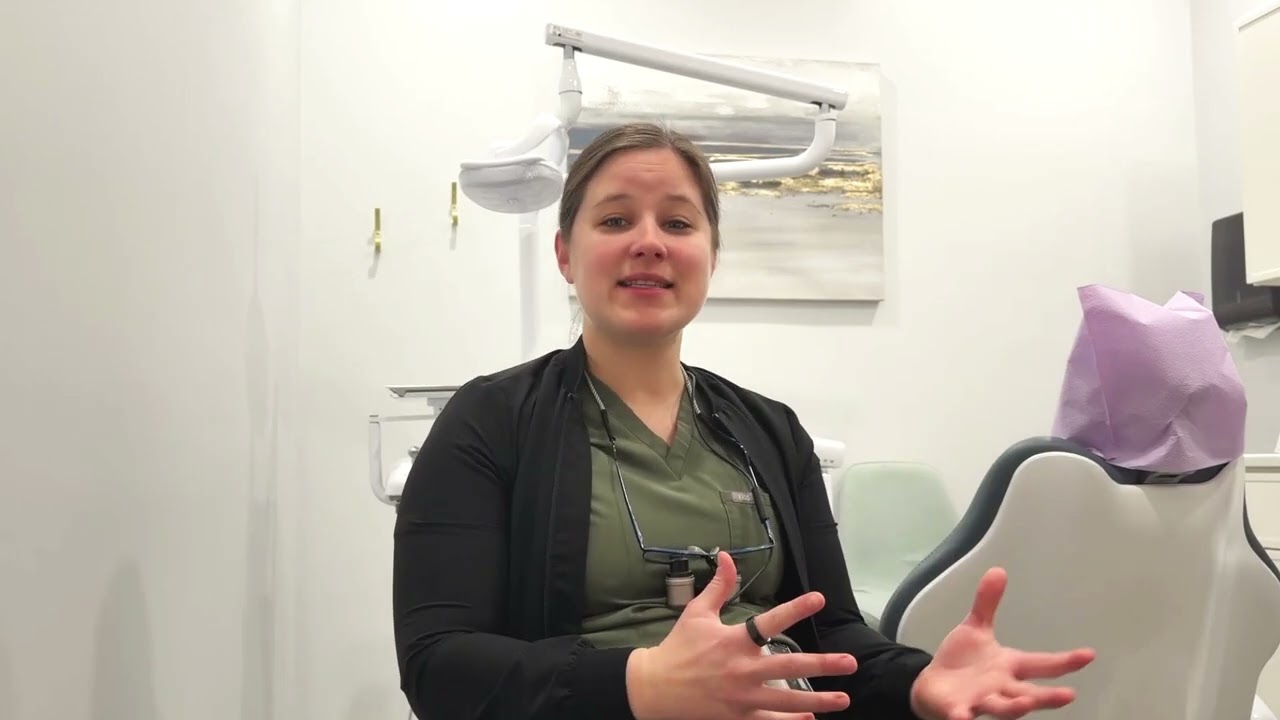
What does a dental implant restoration entail?
Most people today have heard of a dental implant or at least know someone who's had one or seen a commercial on TV. They've become very mainstream for good reason because they're really helpful and do a lot of good things for people who have lost teeth. A dental implant refers to the actual screw piece that goes into the bone, simulating the root of a tooth and anchoring the crown into your mouth so you can chew and function with it like a normal tooth.
The term dental implant restoration refers to the crown that goes on top of the implant. It's a very straightforward procedure, one of the easiest in dentistry. It's non-invasive. We just take a quick scan impression of where that implant is in your mouth, and the lab fabricates a perfectly pretty new crown that sits right into the screw and gets tightened on. As long as the implant is placed securely and everything heals well, getting the crown on top of the implant is a seamless and smooth process, a nice cherry on top of the implant process that can take a lot of time for people.
How many years can you keep a dental implant?
A root canal usually lasts around 10 to 12 years. If you get it done a second time, it usually lasts 5 to 8 years. So, if you are able to do a root canal twice, you could get about 20 years. A single dental implant can also last about 20 years, with a 90 to 95% survival rate. Dental implants are a big investment. They're expensive and take a lot of time to do well and get right. However, if you take good care of it and have adequate bone, and are able to get an implant placed early enough after losing a tooth, research shows a 90 to 95% chance that the implant will stay in your mouth for at least 15 to 20 years, which is a long time.
Many implants can last longer with good hygiene and routine dental cleaning. Ultimately, it's a worthwhile long-term investment. Nothing in medicine lasts forever, but dental implants offer just about the most long-term guarantee for tooth replacement, function, and stability, and overall patient satisfaction.
What are the common reasons for dental implant failure?
Although implants are 90 to 95% successful, there is still a 5 to 10% chance of failure. Since you are transplanting a foreign object into your body, most of the time it is a natural host rejection response. If that happens, it's usually early on, and we can remove the implant, clean everything up, maybe put some bone grafting in, let you heal, and try again. Consistent reasons for implant failure, aside from a normal host rejection response, include having diabetes, especially uncontrolled diabetes. We do not recommend placing implants until a healthy A1C level is achieved.
Another red flag is smoking, which makes it hard to heal and increases the failure rate. If an implant has been in place for a long time but shows bone loss around it, it is often due to a form of gum disease around the implant. Although the implant is sterile and has smooth surfaces, bacteria can sit around it if not cleaned properly, causing bone disease similar to other teeth. It's important to maintain good oral hygiene for implants just like for other teeth, as they can still develop gum disease.
We can do implant restorations for replacing natural teeth if you have one missing tooth or a few missing teeth. If you have the rest of your teeth, we can replace the missing ones. We also do implants for denture patients, especially for the lower denture, which tends to be challenging to keep in place. We can place two implants in the front and do snap-on dentures with special attachments that pop into place, increasing stability and chewing efficiency by about 60%. This is a significant improvement from 15 to 20% to 60 to 75% efficiency. Patients with these snap-on dentures are grateful for the investment and the ability to chew, function, and have more confidence when dining with family and friends. If you have a denture and are having issues with its stability, you can come in for a consultation to see if you're a good candidate for an implant denture.
If you’re searching for quality dental care, we’re here to help. Call (757) 996-4655 or email [email protected] to schedule your visit. Our team is committed to keeping your smile healthy.